Deep house is the emotional register of house music. Where techno tends toward austerity and regular house toward celebration, deep house sits in a more ambiguous emotional space — melancholy, longing, introspection. It moves bodies and moves something else at the same time.
The foundations were laid in Chicago in the mid-1980s. Larry Heard — recording as Mr. Fingers — made records in his bedroom using a Roland drum machine, a bass synthesiser and a Casio keyboard. The chords were jazz-influenced, the tempos unhurried. These weren't records designed for peak-time DJing. They were records for the last hour of the night, when the floor had thinned and the people who remained were there because they needed to be.
Chicago — Where Deep House Was Born
The story begins at the Warehouse, the Chicago nightclub where Frankie Knuckles played to a predominantly Black, gay audience through the late 1970s and early 1980s. Knuckles didn't invent house music alone, but his DJ sets — blending disco, Philly soul, Italo, and early electronic experiments — created the conditions for it. The name itself comes from the club: 'house music' was simply what they played at the Warehouse.
Trax Records and DJ International became the conduits. Larry Heard's "Can You Feel It" (1986) remains the genre's defining statement — a track built on nothing more than a drum machine pattern, a bassline, and those chords. It was gospel music secularised, the feeling of spiritual communion translated into electronic sound. Ron Trent, Boo Williams, and Glenn Underground followed, each pushing the sound deeper. Chicago's gospel tradition — the call-and-response, the building intensity, the release — runs through all of it. Deep house inherited the church's emotional architecture and rebuilt it for the dancefloor.
New York Deepens It Further
New York took Chicago's template and added sophistication. The Paradise Garage, where Larry Levan held court until 1987, was the spiritual counterpart to the Warehouse — a space where DJing was treated as art rather than entertainment. Levan's sets were unpredictable, emotionally devastating, and technically brilliant.
Masters at Work — Louie Vega and Kenny Dope — became the city's most important deep house producers, blending Latin percussion, jazz piano, and gospel vocals into productions that felt like small orchestral works. Labels like Strictly Rhythm and Nervous Records provided the infrastructure, releasing hundreds of 12-inches that defined the New York deep house sound: more polished than Chicago, more rhythmically complex, unmistakably urban.
UK Deep House — A Distinct Tradition
Britain developed its own deep house dialect from the early 1990s onward. The Southport Weekender became the annual gathering point — a festival where deep house, broken beat, and soulful music intersected. DJs like Phil Asher, Charles Webster, and the Idjut Boys shaped a distinctly British approach: warmer, more eclectic, drawing on the UK's sound system culture and its deep connection to American soul and jazz.
Labels like 20:20 Vision, Classic Recordings, and later Aus Music and Hessle Audio's deeper moments kept the tradition alive. The UK scene has always been less purist than its American counterparts — more willing to incorporate elements from garage, broken beat, and ambient music into the deep house framework.
Essential Deep House Labels
Trax Records
The Chicago original. Home to Larry Heard, Phuture, and the first wave of house music. Raw, unpolished, historically essential.
Browse Trax →Peacefrog Records
Amsterdam's deep contribution. Released defining records by Moodymann, Baby Ford, and Motor City Drum Ensemble before anyone else noticed.
Browse Peacefrog →Rush Hour
Rotterdam's finest deep cuts. A shop and label that bridges Detroit, Chicago, and Amsterdam with impeccable curation and reissue programmes.
Browse Rush Hour →Defected
Accessible deep house gateway. Has brought deep house to wider audiences without sacrificing musical quality. Excellent compilations for newcomers.
Browse Defected →20 Essential Deep House Records — The List
- Mr. Fingers — "Can You Feel It"
Trax Records, 1986
The founding document. Three minutes of Roland chords that defined an entire genre and still sound like nothing else. - Larry Heard — "Sceneries Not Songs, Volume One"
Alleviated Records, 1994
An album that proved deep house could sustain long-form listening. Ambient, jazzy, impossibly tender electronic music. - Ron Trent — "Altered States"
Prescription, 1990
A fourteen-year-old from Chicago's South Side made one of the deepest house records ever. Still impossibly beautiful. - Kerri Chandler — "Atmosphere"
Madhouse Records, 1993
New Jersey's greatest contribution to deep house. Chandler's organ chords and rolling basslines became a template for thousands. - Moodymann — "Silentintroduction"
Peacefrog Records, 1997
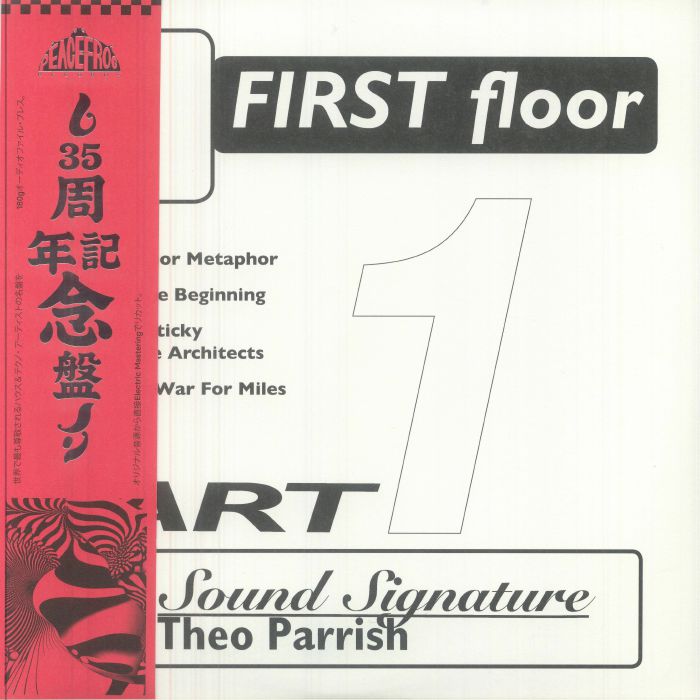
Detroit's Kenny Dixon Jr. blurred the line between house, jazz, and soul. A record that sounds like a city. - Theo Parrish — "First Floor"
Peacefrog Records, 1998
Raw, uncompromising, deeply personal. Parrish made deep house that was as challenging as it was moving. - Masters at Work — "The Masters at Work EP"
Cutting Records, 1991
Louie Vega and Kenny Dope defined New York deep house with Latin rhythms, jazz chords, and downtown sophistication. - Frankie Knuckles — "Beyond the Mix"
Virgin, 1991
The Godfather of House at his most accessible. David Morales co-produced an album that bridged clubs and radio. - Glenn Underground — "Atmosfear"
Strictly Jaz Unit, 1999
Chicago jazz-house at its most refined. Underground brought conservatory-level musicianship to the deepest corners of house. - Boo Williams — "Residual"
Peacefrog Records, 1999
Second-generation Chicago deep house. Williams' productions are warm, rhythmically intricate, endlessly re-playable. - Joe Claussell — "Cosmic Arts"
Spiritual Life Music, 2001
Afro-Latin deep house from New York's most spiritual selector. Claussell's productions feel like ceremonies. - Motor City Drum Ensemble — "Raw Cuts"
MCDE, 2009
A German DJ channelling Detroit and Chicago with remarkable authenticity. The 'Raw Cuts' series is essential deep house. - Omar S — "Just Ask the Lonely"
FXHE, 2006
Detroit's most independent producer. Raw, funky, emotionally direct — deep house stripped to its essence. - Pépé Bradock — "Deep Burnt"
Kif Recordings, 1999
A French producer made one of the most sampled and revered deep house records. That piano loop is eternal. - Lil Louis — "French Kiss"
FFRR, 1989
A Chicago club track that crossed over worldwide. The build, the breakdown, the silence — pure dancefloor drama. - Marcellus Pittman — "1st Batch"
3 Chair Records, 2005
Detroit deep house with the grain of old soul records. Pittman's productions sound like they were made on vintage equipment because they were. - Recloose — "Cardiology"
Peacefrog Records, 2002
New Zealand-born, Detroit-based. 'Cardiology' brought live instrumentation and broken beat influence to the deep house template. - Kyle Hall — "The Boat Party"
Wild Oats, 2012
A new generation of Detroit deep house. Hall was barely twenty when he made records that honoured the tradition while pushing it forward. - Âme — "Rej"
Innervisions, 2006
The track that launched a thousand festivals. Deep, hypnotic, relentless — German precision applied to deep house's emotional core. - Tornado Wallace — "Lonely Planet"
Running Back, 2016
Australian deep house with Balearic warmth. Wallace proved the genre's emotional language was universal, not geographic.
Where to Go From Here
Deep house is a living tradition. New producers continue to push the sound forward while the foundational records remain available — many reissued, some still in print on original labels. The best way to learn is to listen, and the best way to listen is on vinyl, where the warmth and weight of the format match the music's emotional register.
Browse our full house collection for current stock, or explore these guides for adjacent listening:
- Essential Ambient Vinyl Guide — for the after-hours mood
- How to Start a Vinyl Collection in 2026 — if you're just beginning
- The Vinyl Listening Room Setup Guide — build the space these records deserve