Free UK Shipping On Orders Over £75
    Cleaning and storing vinyl records
    Care & Maintenance

    How to Clean Vinyl Records: The Honest UK Care Guide

    To clean a vinyl record properly you need two things, and neither of them is expensive. Brush the record with a carbon fibre brush before every play to lift loose dust. Wet-clean it with a vinyl-safe fluid every six to twelve plays, and always before the first play of a record that is new to you. Dry brushing handles surface dust. Wet cleaning lifts the embedded grime and finger oils that a brush physically cannot reach. Skip either one and you are wasting the other.

    We run an independent UK record shop, so we handle, inspect and pack records every day. What follows is what actually works, which kits are worth the money, and which are marketing.

    Cleaning

    Regular cleaning removes dust and debris. Use the right tools and solutions to keep grooves clean without damage.

    Storage

    Store vertically in a cool, dry place. Proper storage prevents warping and extends the life of your collection.

    Handling

    Always handle records by the edges and labels. Oils and fingerprints damage the grooves permanently.

    Protection

    Protect against heat, humidity, and sunlight. Proper environment control is key to longevity.

    How to Clean Vinyl Records, Step by Step

    Follow these five steps to safely clean vinyl records without causing damage to the grooves or surface.

    1. Gather Your Supplies

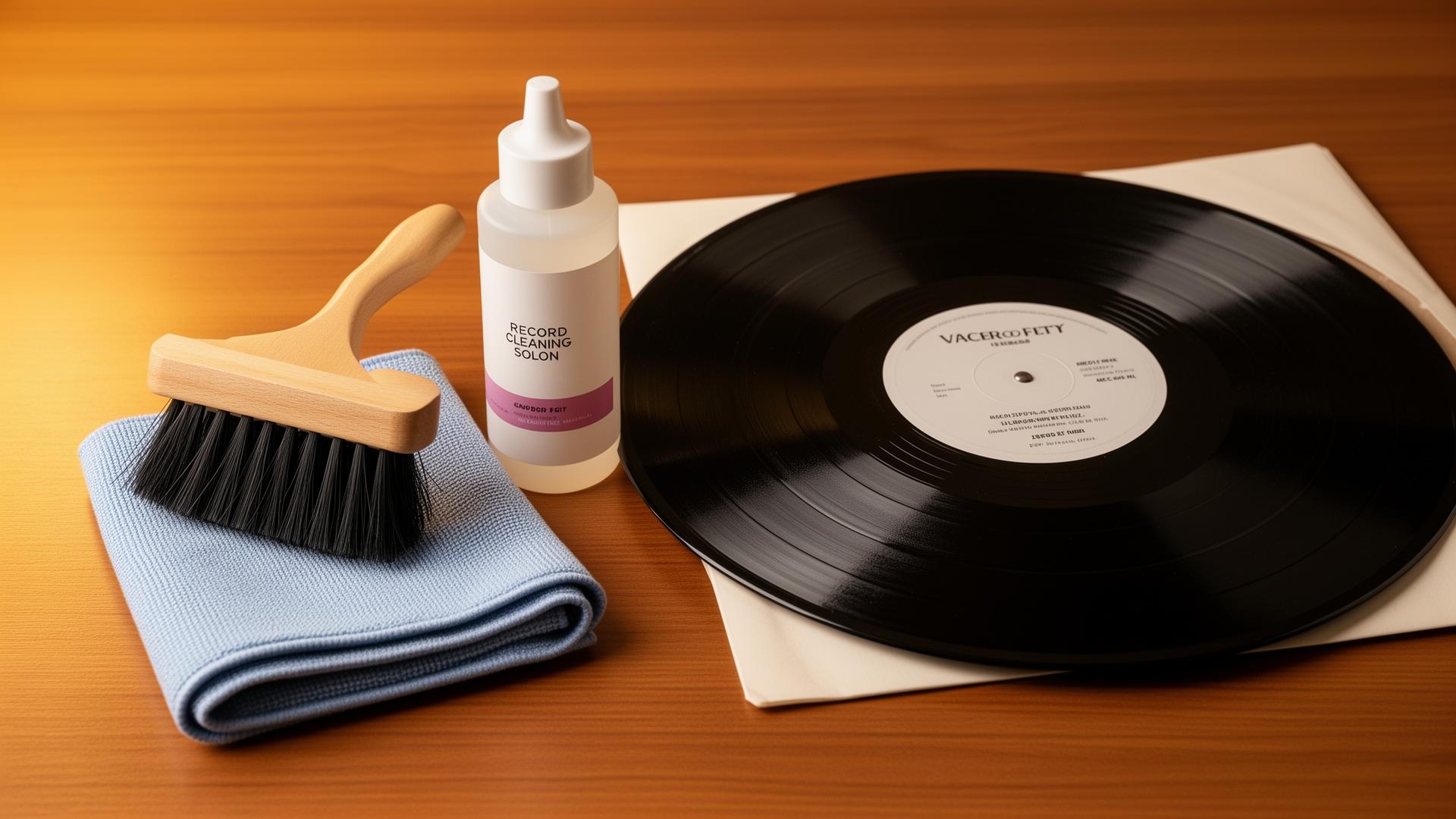
    You'll need a soft-bristled vinyl brush or microfibre cloth, lint-free towels, and optionally a vinyl cleaning solution. Avoid harsh chemicals or ordinary detergents. Invest in products specifically designed for vinyl records, such as Audio Anatomy concentrated cleaning fluid.

    2. Inspect the Record

    Before cleaning, visually inspect the record for visible dust, debris, or dirt. Check for scratches or damage, the same way how we grade to Goldmine standards works. If the record is already in good condition and just needs a light dust-off, skip to step 4.

    3. Apply Cleaning Solution

    Apply a vinyl cleaning solution to the brush or directly to the record. Work from the centre outwards in gentle concentric circles, following the grooves. Let the solution sit for a minute or two to break down dirt, then repeat if necessary.

    4. Rinse With Distilled Water

    Using only distilled water, rinse the record with a damp microfibre cloth, again working from centre outwards. This removes cleaning solution residue. Never use tap water, which contains minerals that damage vinyl.

    5. Dry Completely

    Pat the record dry with a clean, lint-free towel. Stand it upright and let it air dry completely for at least 30 minutes before returning it to its sleeve, ideally into anti-static inner sleeves. Never use heat to dry vinyl, air drying is essential.

    Best Vinyl Record Cleaning Kits UK 2026, At a Glance

    Five cleaning kits cover 95% of UK collectors in 2026. Here's how they compare on method and what you actually get for the money. We do not sell these kits, so check current pricing with the manufacturer or your preferred retailer.

    Cleaning kitMethodBest for
    AudioQuest Anti-Static BrushDry, carbon fibre brushPer-play dust removal. Buy this regardless of what else you own.
    Big Fudge Vinyl Cleaning KitWet, solution + microfibre + brushBeginners. Solid all-in-one kit with decent fluid.
    Spin Clean Mk IIWet, manual bath systemThe classic. Cleans both sides at once. Slow but thorough.
    Knosti Disco-Antistat Generation IIWet, manual bath, German buildSpin Clean alternative. Cleaner result, fiddlier setup.
    HumminGuruUltrasonic, automatedSerious collectors. Cleans deeper than any manual method.
    Degritter Mk IIUltrasonic, premium automatedPro shops, dealers, archivists. Diminishing returns vs HumminGuru.
    Entry level

    Anti-static brush only

    An AudioQuest or Hunt EDA carbon-fibre brush handles routine dust. Combined with good storage, this is enough for 90% of collectors.

    Step up

    Big Fudge or Spin Clean

    Add a wet-cleaning system for second-hand records and deep-clean rotation. Big Fudge is cheaper, Spin Clean is faster per record.

    Serious collectors

    HumminGuru ultrasonic

    Buy this when your collection passes 100 records or you're sourcing a lot of second-hand. Cleans deeper than any manual method.

    Shop cleaning accessories from our catalogue

    Brushes, cleaning fluids and stylus care, the essentials we stock alongside the records. Free UK delivery over £75. See the cleaning products we actually stock, or pick up cheap vinyl records under £20 while you are here.

    Browse cleaning gear

    Wet vs Dry Vinyl Cleaning, When to Use Which

    Dry cleaning, every play

    An anti-static carbon-fibre brush. Five seconds before dropping the needle. Removes airborne dust and reduces the static that pulls more dust into the grooves.

    • Quick, fits into the play ritual
    • Sustainable, no fluid to run out of
    • Doesn't lift embedded grime, that needs wet cleaning

    Wet cleaning, every 6–12 plays

    Vinyl-safe solution + microfibre brush, or a manual bath like Spin Clean / Knosti. Lifts dirt and oils from inside the grooves that brushes can't physically reach.

    • Necessary for second-hand records before first play
    • Audible improvement on records that haven't been wet-cleaned in years
    • Slower, typically 5–10 minutes per record manually

    The honest answer: you need both. Dry brushing per-play keeps records clean between deep cleans. Wet cleaning is for new-to-you records and routine maintenance every few months. Skipping the dry brush wastes wet cleaning; skipping the wet clean leaves accumulated grime to grind against the stylus.

    Ultrasonic Vinyl Record Cleaners, Are They Worth It?

    An ultrasonic cleaner uses high-frequency vibrations in distilled water to dislodge particles from inside the grooves, particles that physically can't be reached by brushes. The result is consistently quieter playback and visibly cleaner vinyl.

    HumminGuru

    Currently the best-value ultrasonic on the UK market. Self-contained, water tank, ultrasonic transducers and drying fan in one unit. Cleans roughly one record every six minutes. Much cheaper than the Degritter while delivering 80–90% of the result.

    Degritter Mk II

    Estonian-engineered, best-in-class ultrasonic. Larger water bath, finer vibration tuning, better drying. Worth it for shops, dealers, or archivists processing thousands of records. For home use, the diminishing return over HumminGuru is hard to justify.

    Buy ultrasonic when: you have 100+ records, you buy a lot of second-hand, or you have rare pressings worth protecting. Otherwise a Spin Clean plus a good brush gets you most of the way for a fraction of the cost.

    Stylus Cleaning, The Other Half

    A clean record on a dirty stylus still sounds terrible. Stylus cleaning is just as important and often neglected.

    Use a stylus cleaning brush, a small stiff-bristled brush that you draw from back to front (never side to side) under the stylus tip. A drop of stylus cleaning fluid on the brush helps dissolve accumulated gunk. Do this every few records, or whenever you notice a build-up on the tip.

    For a more thorough clean, Magic Eraser (the melamine foam sponge) works brilliantly. Cut a small piece, place it on the platter under the stylus, and gently lower the tonearm so the stylus dips into the foam. Lift straight back up. The micro-abrasive foam strips grime from the diamond tip without damaging it. This trick costs pennies and works better than most commercial stylus cleaners.

    If you are upgrading the deck itself rather than the routine, we also stock DJ equipment and accessories.

    DIY Cleaning Solutions, Do They Work?

    You'll find recipes online using distilled water and isopropyl alcohol. A mix of distilled water with a tiny amount of isopropyl alcohol (no more than 10%) and a drop of non-lotion dish soap can work in a pinch, but we'd recommend using a proper record cleaning fluid for anything you care about.

    The risk with DIY solutions is residue. Tap water contains minerals that deposit in grooves as it dries. Soap can leave a film. Isopropyl alcohol at too high a concentration can affect the plasticisers in older vinyl. Dedicated cleaning fluids (like those from GrooveWasher, AM Clean Sound and Vinyl Revival) are formulated to clean effectively and evaporate cleanly without residue.

    If you would rather not mix anything, the Audio Anatomy concentrated cleaning fluid is the bottle we reach for behind the counter.

    Vinyl Storage, The Short Version

    Store records upright, never stacked flat, in a cool dry spot out of direct sun. Stacking is what warps them, and heat is what finishes the job. We cover this properly in seven storage mistakes that quietly warp records.

    Looking for collector-grade rare vinyl?

    Original pressings, audiophile editions and Japanese imports, all graded, inspected and cleaned before they ship.

    Collector's Corner

    Related Reading

    Vinyl Record Care, FAQ

    Explore More Guides