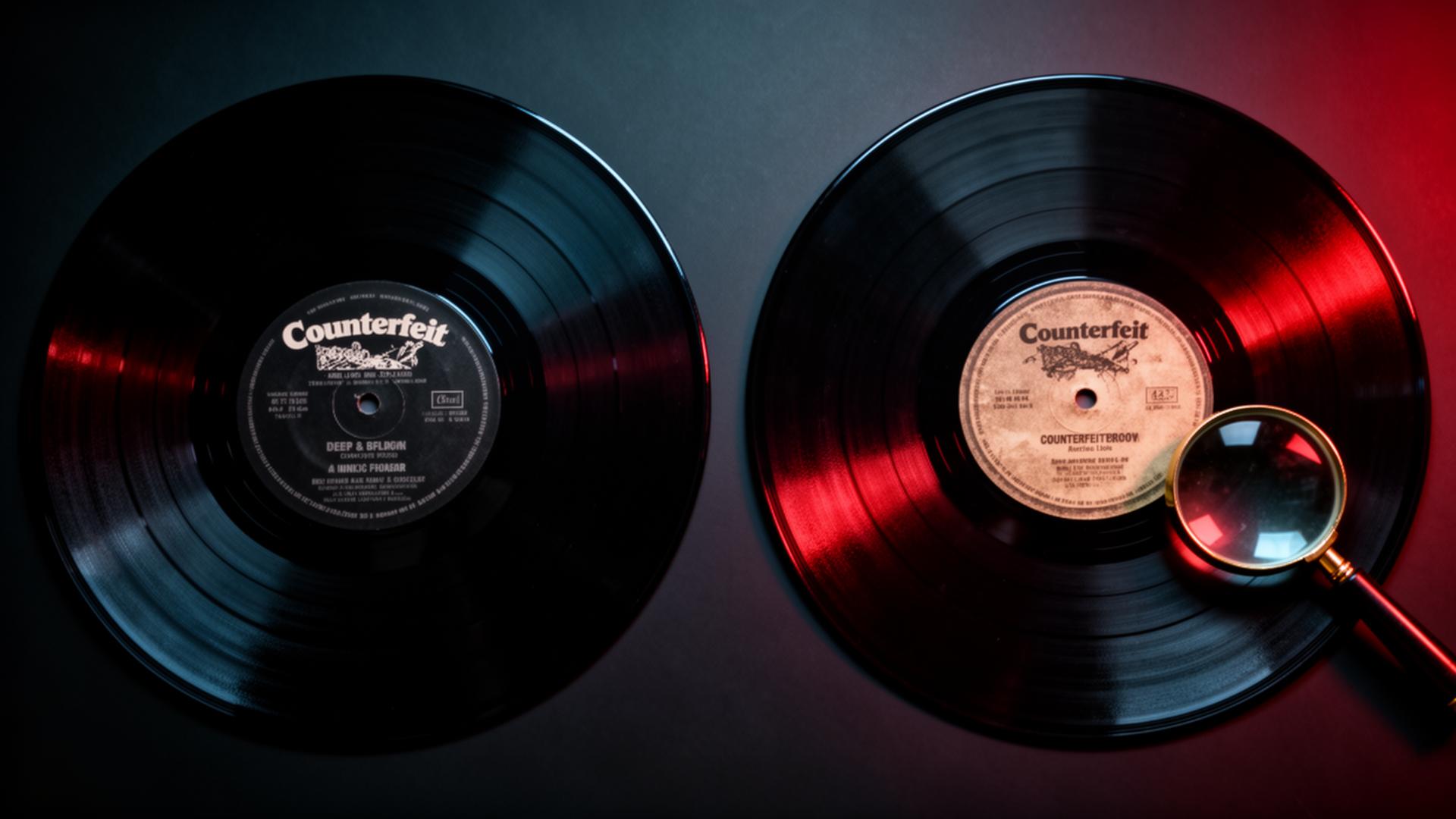
Last month, City of London Police's Intellectual Property Crime Unit raided a warehouse in Luton and walked away with 6,498 counterfeit vinyl records — estimated to be worth nearly £260,000 at retail prices. Fake pressings of Queen, The Beatles, David Bowie, The Sex Pistols, AC/DC, Metallica and Fleetwood Mac, stacked in boxes, ready to move.
It's reportedly one of the largest counterfeit vinyl operations ever broken up in the UK. The BPI's Content Protection Unit worked alongside police to bring it down.
And it shouldn't surprise anyone. UK vinyl sales hit 7.6 million records last year — the 18th consecutive year of growth, generating £238 million. Where there's that kind of money, there are people trying to fake their way into it.
The question is: how do you make sure you're not the one buying a bootleg?
Why Counterfeits Are Getting Easier to Miss
Twenty years ago, a fake vinyl was pretty obvious. Flimsy pressing, blurry artwork, no matrix numbers. Today, counterfeiters have access to better printing equipment, and they're targeting the records people actually want — classic rock, punk, soul, and jazz originals that sell for serious money on Discogs.
The records seized in Luton weren't some back-alley job. They were convincing enough to sell at market prices. Which means you need to know what to look for.
8 Ways to Spot a Fake Record
1. Check the Matrix Numbers
Flip the record over and look at the runout groove — that dead wax area between the last track and the label. On a genuine pressing, you'll find matrix numbers etched or stamped into the vinyl. These are unique identifiers that tell you exactly which pressing plant made the record and which lacquer it was cut from.
On a real original, the matrix is usually a deep, clear stamp — you can feel it with your fingernail. Counterfeits often have shallow, faint, or machine-printed matrices that look almost printed rather than engraved.
Cross-reference whatever you find against Discogs — every legitimate pressing has its matrix documented there. If the numbers don't match any known pressing, walk away.
2. It's New But Not Shrink-Wrapped
This is one of the most reliable tells for counterfeit new releases. Shrink wrap costs money and takes time, so bootleggers routinely skip it. As a rule of thumb: if a record is supposedly new and it's not sealed, that's a red flag worth investigating further.
Legitimate reissues and new pressings almost always come shrink-wrapped from the pressing plant.
3. The Artwork Looks Off
Authentic covers are printed on quality stock with sharp, true colours. Counterfeit printing tends to be slightly soft — not obviously blurry, but lacking the depth and richness of the original. Older pressings (1960s and 70s especially) used oil-based inks that have a particular depth to them. Modern bootleg prints usually can't replicate that.
Look closely at small text and fine detail. If it feels slightly pixelated or the colours seem washed out compared to reference images online, be suspicious.
4. The Vinyl Itself Feels Wrong
Genuine pressings have weight and rigidity. Pick up a record and it shouldn't flex easily — a good pressing is firm. Counterfeit vinyl often uses cheaper compounds that feel flimsy, lighter, or slightly bendy. You'll notice it immediately if you've handled a lot of records.
Colour vinyl is also a favourite of counterfeiters because it's visually striking and distracts from other quality tells. Don't let a pretty pressing cloud your judgement.
5. The Label Doesn't Match
Original labels are clean, precise, and consistent with the era. Check the label design against documented pressings on Discogs — fonts, logo placement, catalogue numbers, and even the colour of the label can vary between genuine pressings and fakes.
Watch for slightly wrong fonts, inconsistent spacing, or catalogue numbers that don't align with the Discogs database entry for that pressing.
6. It's Too Cheap (or Suspiciously Available)
If a sought-after original is being sold for a fraction of its market value, ask why. A genuine 1970s Bowie original in VG+ condition fetches real money — if someone's selling it for £15 in a market stall, either they don't know what they have (possible, but rare) or it's not what it claims to be.
Equally, if a rare limited pressing is somehow available in quantity from a seller you've never heard of, that's worth a pause.
7. The Sound Quality Is Wrong
This one only helps after you've already bought it, but it's worth knowing: most bootlegs are mastered from digital sources — often ripped from CD or streaming — rather than cut from original analogue masters. The result is a thin, compressed sound that doesn't have the warmth you'd expect.
If a record that's supposed to be a warm 1970s analogue pressing sounds strangely bright and digital, something's off.
8. Use Discogs Before You Buy
For anything that costs more than a few quid, use Discogs to verify. Search the artist and title, find the exact pressing you're being sold (using the matrix number, label details, and country of origin), and check the marketplace for what it's actually selling for. If the record doesn't appear in the database at all, or appears only as "unofficial" or "bootleg", that tells you everything.
Where Are Fakes Most Likely to Turn Up?
The honest answer: anywhere records change hands outside of established shops. Car boot sales, market stalls, some eBay sellers, and social media marketplaces are higher risk. That's not to say every record from those places is fake — far from it — but they're where counterfeiters prefer to operate, away from scrutiny.
Buying from independent record shops, reputable Discogs sellers with strong feedback, and specialist online retailers gives you a layer of protection. The shop has a reputation to protect. The anonymous market stall doesn't.
What to Do If You Think You've Been Sold a Fake
If you suspect a record you've bought is counterfeit, you can report it to the BPI or your local Trading Standards office. If it was bought online, report the seller to the platform.
And if you bought it believing it was genuine and paid accordingly, you may have grounds to request a refund — particularly if it was sold as an original pressing and it clearly isn't.
The Bigger Picture
The Luton bust is a reminder that vinyl's revival has a shadow side. The more valuable the format becomes, the more attractive it is to counterfeiters. The records seized last month weren't obscure titles — they were the ones every new collector wants: the classics, the icons, the albums that sit at the top of every "where do I start" list.
The best protection is knowledge. Know what you're buying, know what to look for, and when in doubt, buy from somewhere you trust.
If you're building a collection and want to know a record is the real thing, we're always happy to help. Every record we sell is verified — that's what being an independent specialist means.
Sources: NME · Music Ally · Music Business Worldwide · DJ Mag · What Hi-Fi
