








There's something happening in the world of hi-fi that feels a lot like the vinyl revival itself. While the big-box manufacturers keep pumping out speakers by the thousands, a quieter revolution is happening in small workshops across the globe. Independent makers, often just a handful of obsessive builders: are creating gear that's as much craft as it is engineering.
And here's the fun part: you don't have to choose between "artisan" and "affordable." The DIY kit movement is stronger than ever, and it sits right alongside these high-end, small-batch brands. Different paths. Same destination: better sound.
If you've spent good money on a quality turntable and you've curated your record shelf like it's your personality (same), it's worth thinking about what's actually turning those grooves into air-moving music. Let's take a lap around the world, through a few very specific, very interesting boutique makers, and then bring it back to DIY.
🇺🇸 United States: Fleetwood Sound and the Deville Loudspeaker
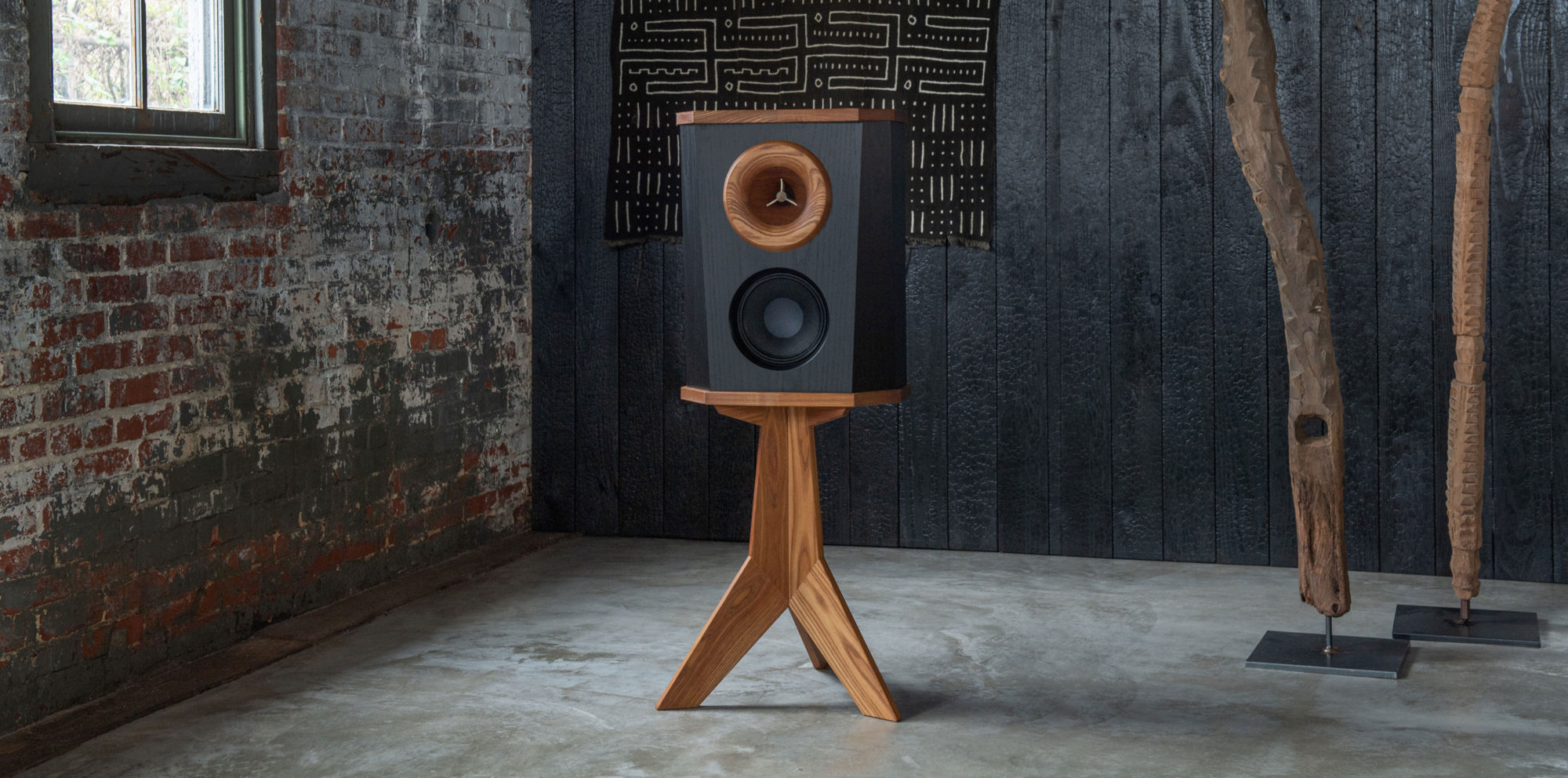
If you like your hi-fi with a bit of muscle and a bit of style, Fleetwood Sound is one to know. Their Deville Loudspeaker is a great example of what boutique American audio does well: big presence, confident tuning, and a build that looks like it belongs in the room, not hidden in a corner.
What's interesting here isn't just "it's expensive so it must be good." It's the intent. Speakers like the Deville are designed as complete objects, cabinet, drivers, finish, voicing: where the goal is a specific listening experience, not a spec-sheet victory.
If your vinyl setup leans toward rock, soul, funk, or anything that benefits from real weight and dynamic swing, this kind of speaker philosophy tends to make sense. Not universally "better." Just a flavour that a lot of listeners end up loving.
Takeaway: boutique doesn't always mean delicate. Sometimes it means bold.
🇫🇮 Finland (with Sweden vibes): Ville Speakers and modern handmade minimalism
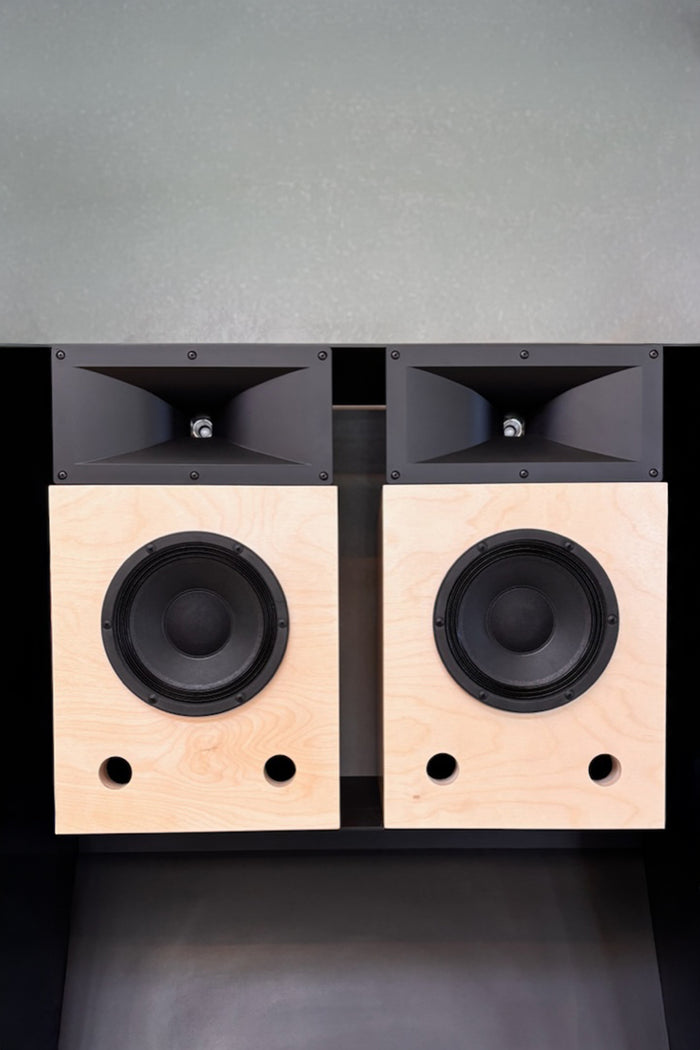
Some boutique brands shout. Others whisper. Ville Speakers sits firmly in the second camp.
This is that Nordic-adjacent approach where design and restraint do a lot of the talking: clean shapes, careful finishes, and that "someone made this by hand because they care" vibe you can spot immediately. The Instagram presence is part of the point too, these small makers often document the process like a craft studio, not a factory.
And honestly? That's useful as a buyer. You get a clearer sense of materials, cabinet work, and how much attention is going into each build.
Takeaway: the boutique scene isn't just about sound. It's also about how something is made.
🇮🇩 Indonesia: Main Audio and the rise of global small-batch hi-fi
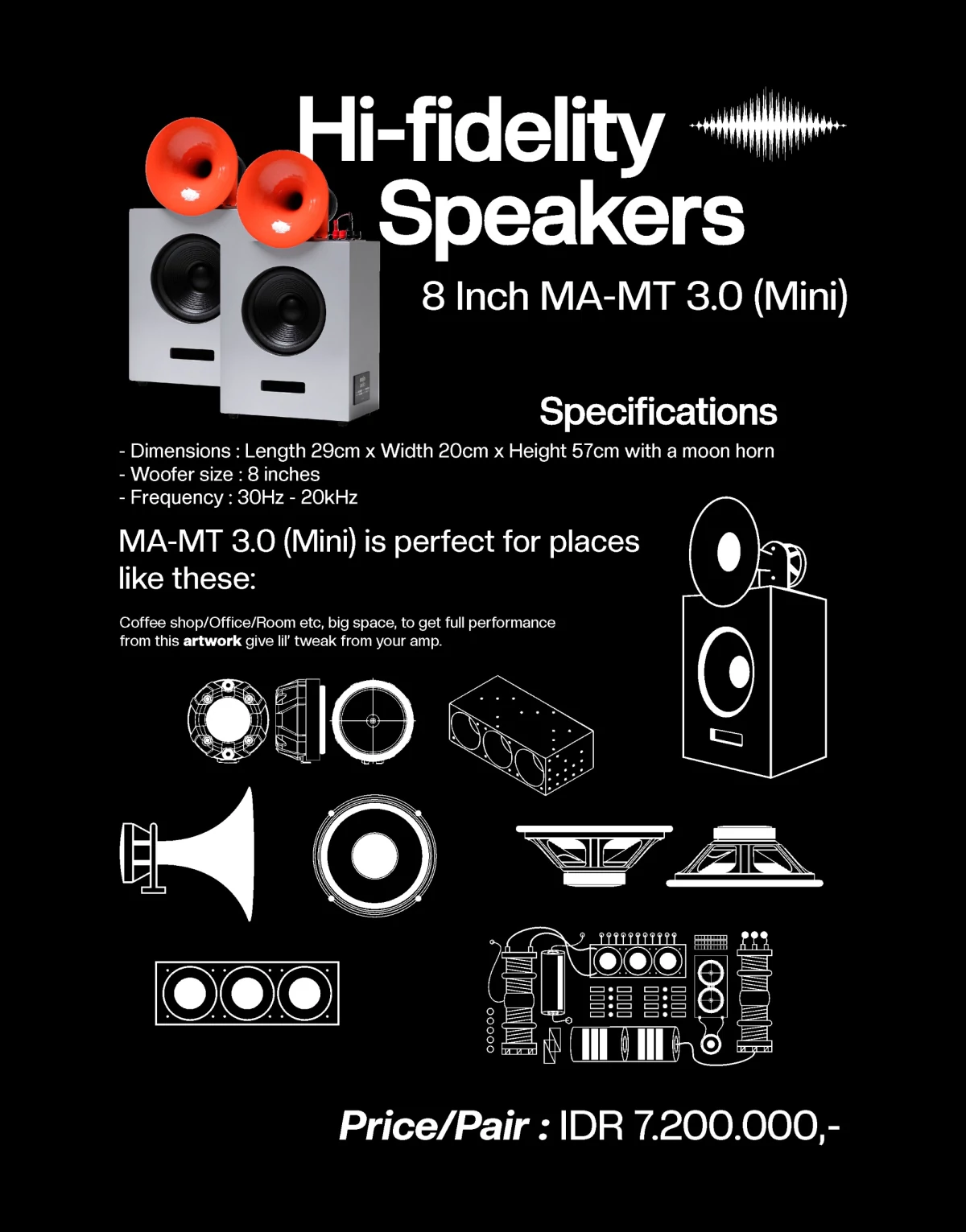
It's easy to forget how global the boutique audio world has become until you start looking outside the usual US/EU/Japan triangle. Main Audio is a great reminder.
Indonesia has a growing community of builders, woodworkers, and audio obsessives who take the "small-batch" idea seriously, especially when it comes to cabinet craft and finish work. Even if you're not shopping internationally, it's worth seeing what's happening there because it broadens your sense of what "high-end" can look like.
It also underlines something important: you don't need a massive industrial ecosystem to build great speakers. You need skills, time, and taste. That's it.
Takeaway: boutique hi-fi isn't confined to the old-school audio capitals anymore.
🇯🇵 Japan: Kenrick Sound and the art of custom JBL restorations

If you've ever heard a properly sorted vintage JBL setup and thought, "Right… I get it now," you'll understand why Kenrick Sound has such a strong reputation.
They're basically masters of the custom JBL world: restorations, rebuilds, refinishes, and complete systems that take classic American speaker DNA and bring it up to a level of fit-and-finish (and care) that feels very Japan. It's one part engineering, one part woodworking, and one part deep cultural respect for the object.
This is also a good place to say the quiet bit out loud: the vintage vs modern debate never ends. And it shouldn't. But if you want vintage dynamics with modern execution, Kenrick's lane is hard to ignore.
Takeaway: "boutique" can mean brand-new, or it can mean making old legends right again.
🇳🇴 Norway: NNNN and high-end horn thinking

Then there's NNNN out of Norway, doing high-end horn tech with a distinctly modern perspective.
Horns can be a touchy subject. Some people hear "horn" and think shouty PA sound. Others hear "horn" and think speed, scale, and that live-music immediacy you just don't get from some conventional box speakers. The truth is, both camps have points: horns are incredibly sensitive to design choices and system matching.
What NNNN represents (and why they're worth mentioning) is the fact that horn design is still evolving. It's not stuck in the past. It's an active area of experimentation for serious listeners who want maximum efficiency and dynamics, often a great match for low-watt tube amps and vinyl-forward systems.
Takeaway: if you chase realism and dynamics, horns are still a very real rabbit hole.
🔧 The DIY Revolution (still): Build your own high-end sound
Now let's bring it back to DIY, because this is where a lot of vinyl lovers can get serious performance without remortgaging anything.
The DIY speaker kit movement has matured to the point where a £400–600 home build can genuinely compete with retail speakers costing three or four times as much. Why? Because you're not paying for marketing, retail margins, or fancy showrooms. You're paying for drivers, crossover components, and cabinet materials. Period.
And here's the bridge between DIY and the artisan world above:
- Boutique makers show you what's possible when craftsmanship and voicing are the priority.
- DIY lets you borrow that mindset, then put the budget into parts, not branding.
If you love the idea of something like Fleetwood's finished product, but you also love getting hands-on, DIY is the obvious middle path.
The Linkwitz Legacy
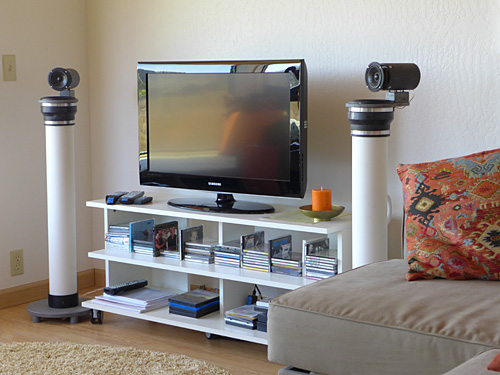
The late Siegfried Linkwitz was a legendary audio engineer who spent his final years sharing his speaker designs with the DIY community. His LX521 and LXmini designs remain gold standards: fully open-source blueprints that anyone can build with basic woodworking skills and a soldering iron. The sound quality rivals speakers costing tens of thousands, and the plans are available free online at Linkwitz Lab.
Parts Express and the "just tell me what to buy" option
For those wanting a more turnkey experience, Parts Express offers complete kits with pre-cut cabinets, matched drivers, and step-by-step instructions. It's a great way to get the DIY satisfaction (and value) without getting stuck in analysis paralysis.
Jantzen Audio and upgrading the bits that matter
Europe's DIY scene often revolves around Jantzen Audio, whose capacitors, inductors, and resistors have become the go-to choice for serious builders. The quality of your crossover components matters enormously, arguably as much as the drivers themselves, and Jantzen has made audiophile-grade parts accessible to home builders.
Why this matters for vinyl lovers
You've already chosen the analogue path. You get the ritual. The artwork. The liner notes. And yes, the sound.
Your speakers are the final link in that chain. They're what turns the tiny mechanical movement of a stylus into a room-filling event. So it's worth being picky.
Boutique makers like Fleetwood, Ville, Main Audio, Kenrick Sound, and NNNN prove there isn't one "correct" way to do high-end. There are lots of ways. And the best one is the one that fits your room, your records, and your taste.
If you're still dialling in your turntable setup, start there. But once the source is sorted, give some thought to where that signal ends up. That's where the magic (or the mess) happens.
Happy listening.