

You've spent good money on that turntable. You've calibrated the tracking force, leveled the platter, maybe even upgraded the cartridge. But here's the uncomfortable truth: if you're still storing your records in those flimsy, generic inner sleeves that came with them, you're quietly sabotaging everything you've worked for.
Inner sleeves are the unsung heroes, or villains, of vinyl care. Most collectors obsess over outer protection (those pristine poly outers do look clean), but it's what's happening inside the jacket that determines whether your records will sound pristine in twenty years or crackle like a bonfire.
Let's talk about why the wrong sleeve is slowly destroying your collection, and what you can actually do about it.
The Silent Killer: PVC Off-Gassing
If your records came with thin, semi-transparent plastic sleeves that feel slightly sticky or smell vaguely chemical, you've got a problem. Those are typically made from polyvinyl chloride (PVC), and they're legitimately dangerous to your vinyl.
Here's the chemistry lesson nobody asked for but everyone needs: PVC sleeves release volatile compounds over time, a process called off-gassing. These chemicals don't just evaporate harmlessly into the air. They migrate directly onto your record's surface, where they can bond with the vinyl compound itself. The result? A cloudy, hazy film that's nearly impossible to remove, and in severe cases, actual etching of the grooves.

You'll recognize off-gas damage when you see it. The record surface looks foggy or dulled, like someone breathed on it and it never cleared. Sometimes there's a rainbow-like sheen. Clean it all you want, that damage is often permanent. The grooves have been chemically altered, and that means your sound quality is compromised forever.
The timeline matters, too. This isn't something that happens overnight. PVC off-gassing accelerates in warm, humid conditions and worsens over years or decades. That vintage record you scored from someone's attic? If it was sitting in a PVC sleeve for 40 years, there's a decent chance it's already affected.
The Paper Problem: Abrasion and Static
So PVC is out. What about good old-fashioned paper sleeves? They're natural, right? Biodegradable? Surely they can't be that bad?
Well, not exactly. Basic paper inner sleeves, especially those rough, unlined ones from budget pressings, create two separate problems: abrasion and static buildup.
Every time you slide a record in or out of a plain paper sleeve, microscopic fibers from the paper drag across the vinyl surface. It's gentle at first, but over dozens or hundreds of plays, those micro-scratches accumulate. You start hearing surface noise that wasn't there before. Pops. Clicks. That faint hiss that wasn't part of the original recording.
Plain paper also sheds. Those little paper fibers? They settle into your record's grooves, where they either get ground in by your stylus or create audible artifacts during playback. And paper is hygroscopic, meaning it absorbs moisture from the air, which can then transfer to your records and encourage mold growth in humid climates.
Then there's static. Paper sleeves are magnets for static electricity, especially in dry environments. That static charge attracts dust particles like a magnet, which means your freshly cleaned record is covered in debris within seconds of being sleeved. Static also increases stylus skip and can occasionally cause audible pops when the charge discharges through your cartridge.
What Actually Works: The Sleeve Hierarchy
Alright, enough doom and gloom. Let's talk solutions. Not all inner sleeves are created equal, and there's a clear hierarchy of protection once you know what to look for.
High-Density Polyethylene (HDPE) is the gold standard for plastic-based sleeves. Unlike PVC, HDPE doesn't off-gas. It's chemically stable, anti-static, and smooth enough that it won't scratch your records during normal handling. The downside? Pure HDPE sleeves can sometimes feel a bit slippery, and they occasionally generate minor static in very dry conditions: but it's nowhere near the level of paper.

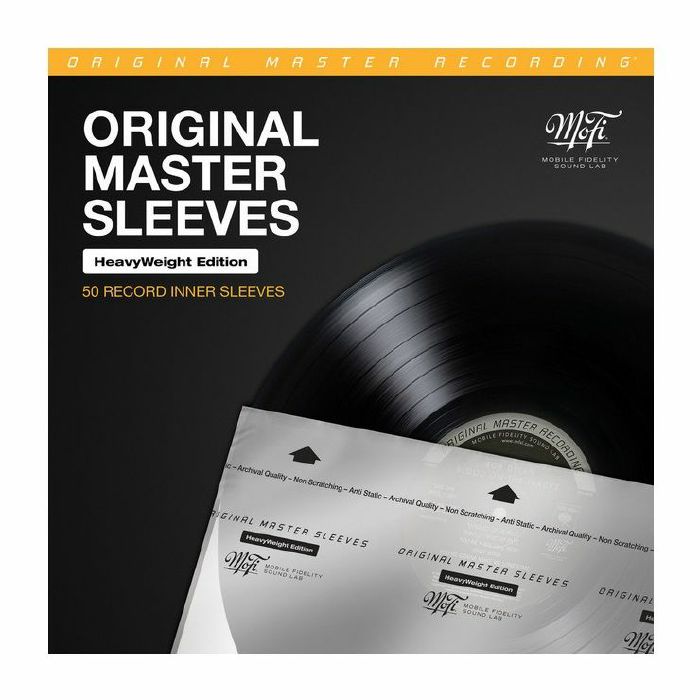
Rice paper or polyethylene-lined paper sleeves are the hybrid solution many collectors swear by. You get the structural integrity and breathability of paper on the outside, with a smooth, anti-static poly lining on the inside that actually touches the record. Brands like MoFi (Mobile Fidelity) and Goldring have made names for themselves with these designs, and for good reason: they work brilliantly.
These lined sleeves prevent scratching, reduce static, and allow for air circulation, which helps prevent moisture buildup. The paper exterior also gives you a surface to write on (useful for catalog notes or pressing details), and they just feel premium in your hands.
Archival-grade sleeves take things even further. These typically use acid-free paper with museum-quality poly linings, designed to last decades without deteriorating. If you're storing genuinely rare or valuable pressings: original Blue Notes, first-press Beatles, that kind of thing: archival sleeves are worth the extra investment.
The Vinyl Vault Recommendation: Where to Start
If you're staring at a collection of 200+ records thinking, "There's no way I'm re-sleeving all of these," here's the practical approach: prioritize.
Start with your most valuable or frequently played records. Your favorites. The ones you actually spin regularly. Those are the records accumulating the most wear from subpar sleeves, and they're also the ones you'd be most gutted to see degraded.
For everyday listening records that aren't particularly rare, a decent polylined paper sleeve offers excellent protection at a reasonable price point. You're looking at brands like MoFi, Sleeve City, or even generic "audiophile" sleeves from reputable suppliers. At Vinyl Vault, we stock protective inner sleeves specifically because we've seen too many collections suffer from neglect in this department.
For your holy grails: those first pressings, limited editions, or records that would genuinely cost serious money to replace: step up to premium archival sleeves. Then, for extra paranoia points, you can even double-sleeve: record goes in the archival inner, which then goes inside a secondary poly-lined sleeve before sliding into the jacket. Is it overkill? Maybe. Will your grandkids thank you when they inherit a pristine copy of Kind of Blue? Absolutely.

Practical Sleeve Swaps: What to Ditch Immediately
Let's be clear about what needs to go, right now:
- Any thin, sticky, or chemical-smelling plastic sleeves → Bin them. These are PVC death traps.
- Rough, unlined paper sleeves that shed fibers → Replace them, especially if you're seeing paper dust accumulating on your records.
- Vintage cardboard inner sleeves → These were often manufactured with abrasive materials that are actively hostile to vinyl. Out they go.
If you're unsure whether a sleeve is safe, here's a quick test: rub it between your fingers. Does it feel smooth or rough? Does it generate static when you handle it? Does it smell like anything at all? If it's rough, staticky, or chemical-scented, it's not doing your records any favors.
The Long Game
Here's the thing about sleeve care: it's invisible maintenance. You won't notice the difference immediately. Your records won't suddenly sound 30% better the day after you re-sleeve them. But five years down the line: ten, twenty: the cumulative effect is massive.
Records stored in quality inner sleeves maintain their factory-fresh sound. The groove walls stay clean. Surface noise doesn't creep in. Your collection holds its value. Meanwhile, the guy who kept everything in those sketchy PVC sleeves from 1987? He's stuck with foggy, degraded vinyl that sounds like it's being played through a layer of dust, because effectively, it is.
Sleeve upgrades aren't sexy. They don't make for dramatic before-and-after photos. But they're one of the smartest, most cost-effective investments you can make in your collection's longevity. Think of it as preventative maintenance: like changing the oil in your car before the engine seizes.
Your records deserve better than whatever came in the package. Give them the protection they need, and they'll reward you with decades of clean, quiet playback. That's the art of the inner sleeve.