
Hey there, groove-seekers. Penny here, your resident needle-dropper and word-spinner at Vinyl Vault.
If you've spent more than five minutes in a record shop (or scrolled through our online record shop London collection), you've probably faced the ultimate collector's dilemma. On one hand, you have the classic, stoic black vinyl. It looks like it belongs in a jazz club in 1958. On the other hand, you have a "Limited Edition Neon Galaxy Splatter" pressing that looks like a supernova trapped in plastic.
The question is: are you sacrificing your ears for your eyes? Is that gorgeous swirl actually a siren song leading your stylus toward a jagged reef of surface noise?
The "Black vs. Color" debate is as old as the format itself, and it's filled with more myths than a Greek epic. Today, we're going to strip away the hyperbole and look at the actual science, chemistry, and manufacturing behind the records we love. Put on your lab coats (and your best headphones), because we're going beyond the black.
The Carbon Connection: The Myth of "Standard" Black
To understand why people think black vinyl sounds better, we first have to understand what black vinyl actually is.
Most people assume that black is the "natural" state of a record. It isn't. In its raw, virgin form, Polyvinyl Chloride (PVC) is actually clear. It looks like a pile of translucent plastic pellets. To turn those pellets into the discs we recognize, manufacturers add a variety of lubricants, stabilizers, and, most importantly, pigments.
The "standard" black color comes from an additive called carbon black. In the early days of the industry, carbon black wasn't just used for aesthetics; it served a vital mechanical purpose.
- Durability: Carbon black makes the PVC compound stronger and more resistant to the physical wear and tear of a diamond needle dragging through its grooves.
- Conductivity: It helps dissipate static electricity. Static is the mortal enemy of a clean listen, as it attracts dust and causes those annoying "pops" and "clicks."
- Consistency: Because black has been the industry standard for decades, the chemical "recipe" is incredibly stable. Pressing plants know exactly how it behaves under heat and pressure.
So, when an audiophile vinyl purist tells you black is better, they aren't totally crazy. Historically, the carbon black additive provided a level of structural integrity and noise reduction that other colors struggled to match. But that was then. This is now.

Color vs. Quality: Has Modern Tech Caught Up?
If you were buying a colored record in the 1970s, you probably were sacrificing some sound quality. Back then, colored pigments often changed the melting point of the vinyl or didn't mix perfectly with the PVC, leading to "surface noise", that underlying hiss you hear during quiet passages.
However, the world of limited edition vinyl has undergone a revolution. Modern chemical engineering has gifted us with high-purity pigments that mimic the properties of carbon black without the actual "black" part.
The Purest Form: Clear Vinyl
Interestingly, many pressing engineers will tell you that clear vinyl is actually the "purest" form of the record. Because it contains no pigments at all, there are fewer additives to interfere with the groove structure. If you buy vinyl records that are transparent, you are often getting a pressing that is as close to the master source as the medium allows.
Opaque Colors and Splatters
What about that solid red or multi-colored splatter? Generally speaking, a single-color opaque record (like solid white or blue) sounds indistinguishable from black to 99% of listeners.
Where things get tricky is with splatters and marbles. These records are made by mixing different colored PVC pellets. Because different colors can have slightly different melting points, the boundaries where two colors meet could theoretically create a tiny microscopic bump. In reality, with modern pressing standards at a high-quality plant, you'd need a five-figure sound system to hear the difference.
The Real Troublemakers: The Exceptions
While we're debunking myths, we have to be honest: not all records are created equal. There are two specific types of "fancy" vinyl that consistently struggle with audio fidelity.
1. Picture Discs
We love how they look on a wall, but picture discs are the notorious "bad boys" of the audio world. Unlike a standard record, a picture disc is a "sandwich." It consists of a base plastic core, a printed paper graphic, and a very thin clear plastic foil on top where the grooves are pressed. Because that top layer is so thin, the grooves can't be as deep or as precise. This almost always results in a higher "floor" of surface noise.
2. Glow-in-the-Dark Vinyl
They look incredible under a blacklight, but glow-in-the-dark records often sound like they're being played through a light drizzle. The phosphorescent additives used to make the vinyl glow are physically "grittier" than standard pigments. This grit translates into audible surface noise. If you're an audiophile vinyl collector, you might want to stick to the standard versions of these releases.

Mastering > Pigment: The Truth About Sound
Here is the secret that the "black vinyl only" crowd often forgets: The color of the plastic matters significantly less than the quality of the mastering.
You could have a record pressed on the most expensive, carbon-enriched black vinyl in the world, but if the original recording was poor, or if the mastering engineer didn't know how to translate those frequencies for a needle, it will sound like garbage.
Conversely, a brilliant master, cut from the original tapes by a pro like Bernie Grundman or Kevin Gray, pressed on neon pink vinyl will blow a poor black pressing out of the water every single time. When you browse our new arrivals, pay more attention to the label and the "Mastered by" credits than the color of the wax. A great master is the foundation of the house; the color is just the paint.
Collector's Tip: Do Your Homework
Before you drop your hard-earned cash on a rare limited edition vinyl, there is one tool every collector should use: Discogs.
Because every pressing is unique, the community often leaves detailed reviews of specific versions. Look for comments like "Dead quiet pressing" or "Ignore the color, this sounds amazing." If a specific colored variant has a known issue with surface noise, the vinyl community is usually very vocal about it.
If you're looking for something with a bit of history and character, you might even find that some second-hand vinyl pressings from specific eras sound better than modern reissues, regardless of color.

Final Thoughts: The Choice is Yours
So, does colored vinyl sound different?
- Technically: Yes, pigments change the chemical makeup of the disc.
- Practically: For 95% of modern pressings, the difference is so small it's effectively zero.
If you are a high-end audiophile with a system that can detect a fly landing on your speakers, you might prefer the consistency of black or the purity of clear vinyl. But if you're like the rest of us, people who love music and the tactile, visual joy of collecting: don't be afraid of the rainbow.
The best part of vinyl is the experience. If a translucent green Jazz record makes you smile every time you pull it out of the sleeve, that's a win. If a heavy-duty Techno 12-inch in classic black feels more "right" for your DJ set, go for it.
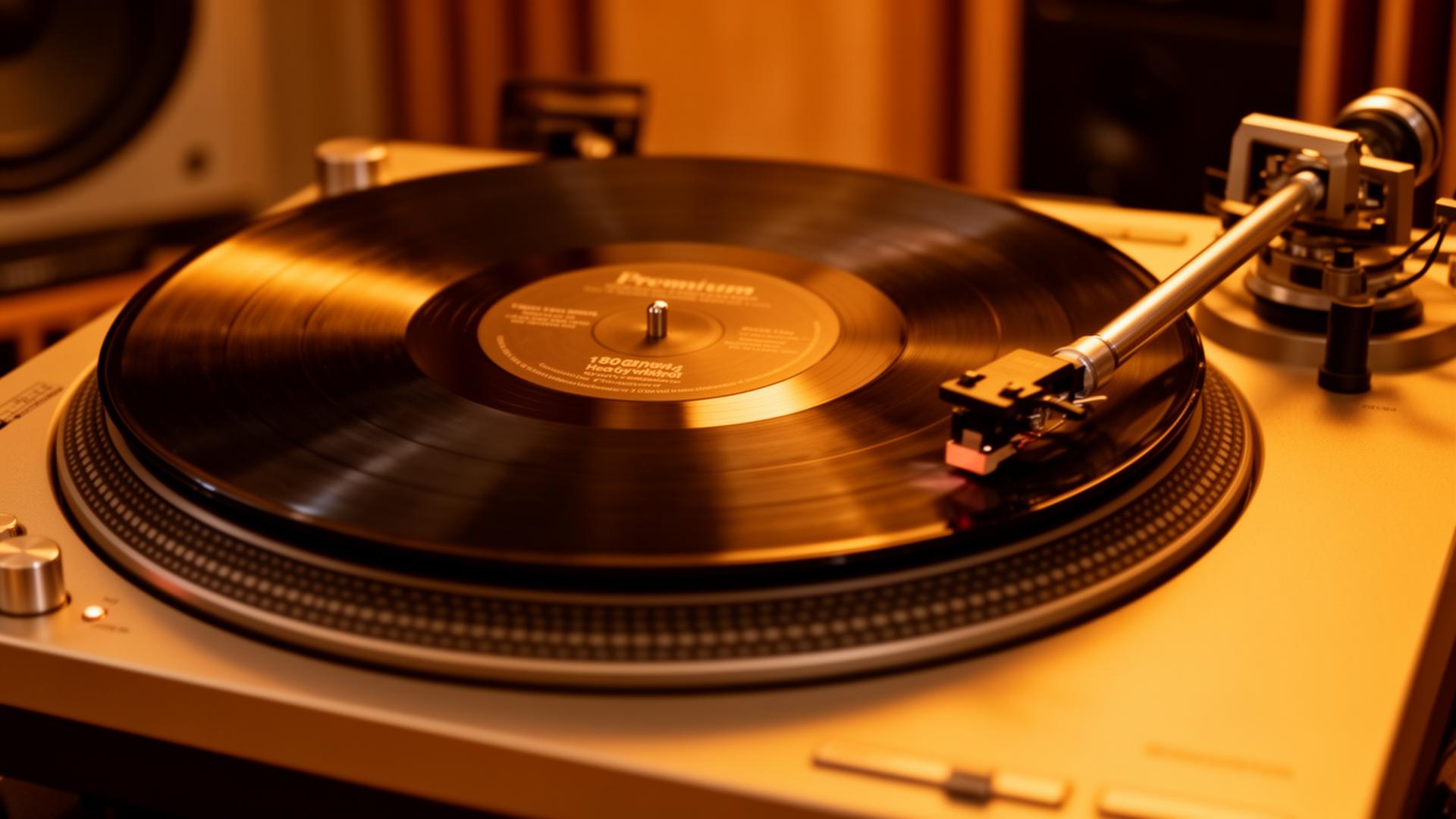
At the end of the day, whether it's black, blue, or splattered with gold, the best record is the one currently spinning on your platter.
Ready to add some color (or classic black) to your shelves? Check out our latest stock at Vinyl Vault and find your next favorite spin. Whether you want to buy vinyl records that are rare and colored or just want some cheap vinyl records to build your foundation, we've got you covered.
Keep it spinning,
Penny
Vinyl Vault Blog Writer